Dispute Avenger
Do-it-yourself credit disputes, with the paperwork, the deadlines and the record handled properly.
See the attorney pagePrivate repo · code walkthrough on request
- automated tests
- 1,100+automated tests
- recorded architecture decisions
- 77recorded architecture decisions
- day legal clocks tracked
- 30 / 45day legal clocks tracked
- encryption on every upload
- AES-256encryption on every upload
Anyone can dispute an error on their credit report, and the law gives the bureaus 30 days to answer — 45 in some cases. Doing it yourself means comparing three or more reports line by line, writing letters that cite the right sections, mailing them certified, keeping the receipts, and noticing when a deadline quietly passes.
Dispute Avenger is a self-help tool for that work, not a credit repair service: the person decides what is wrong and says why in their own words, and the software keeps everything else straight. It is running as a live beta. Public launch waits on a legal review, and billing is built but switched off until then.
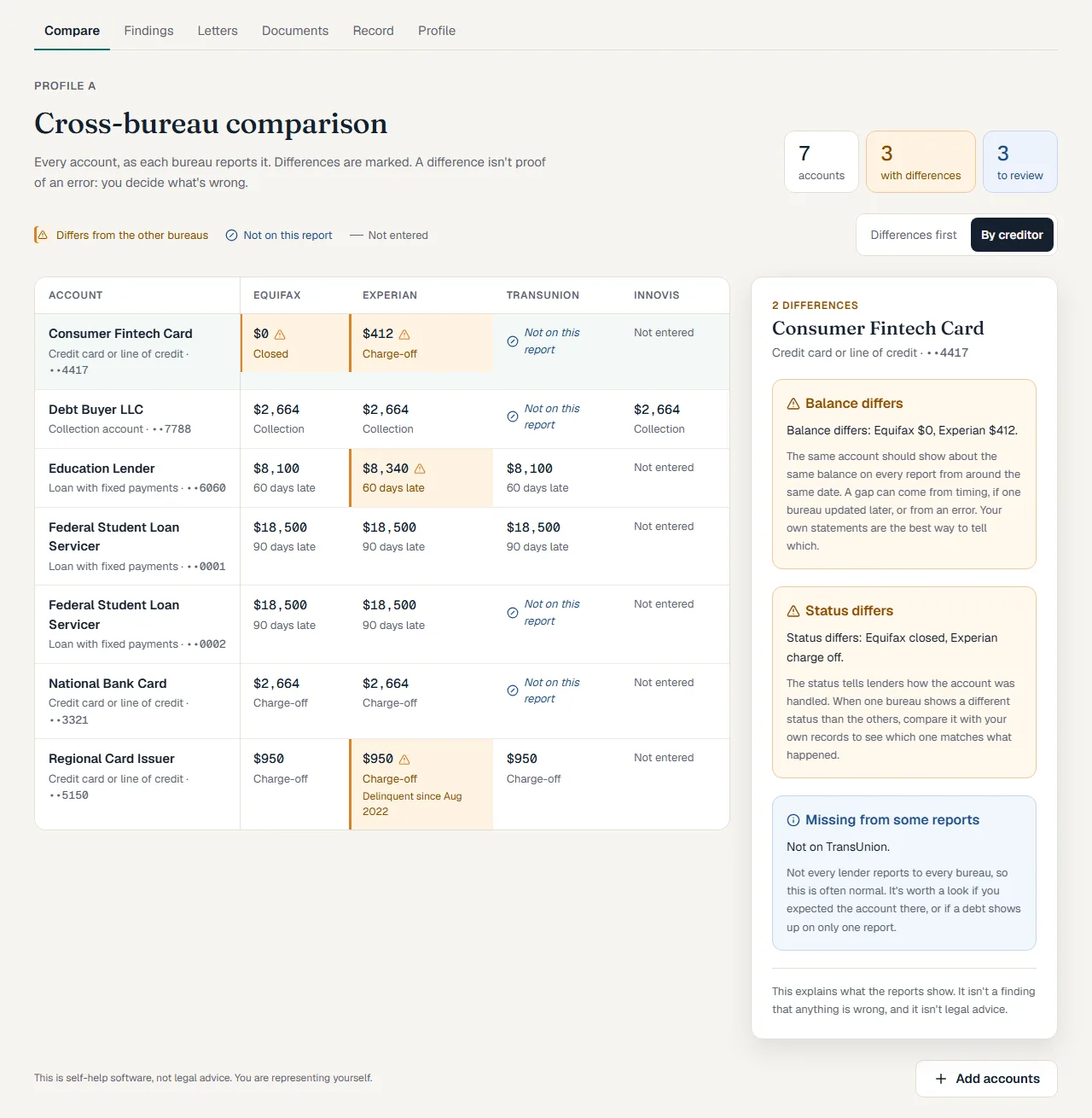
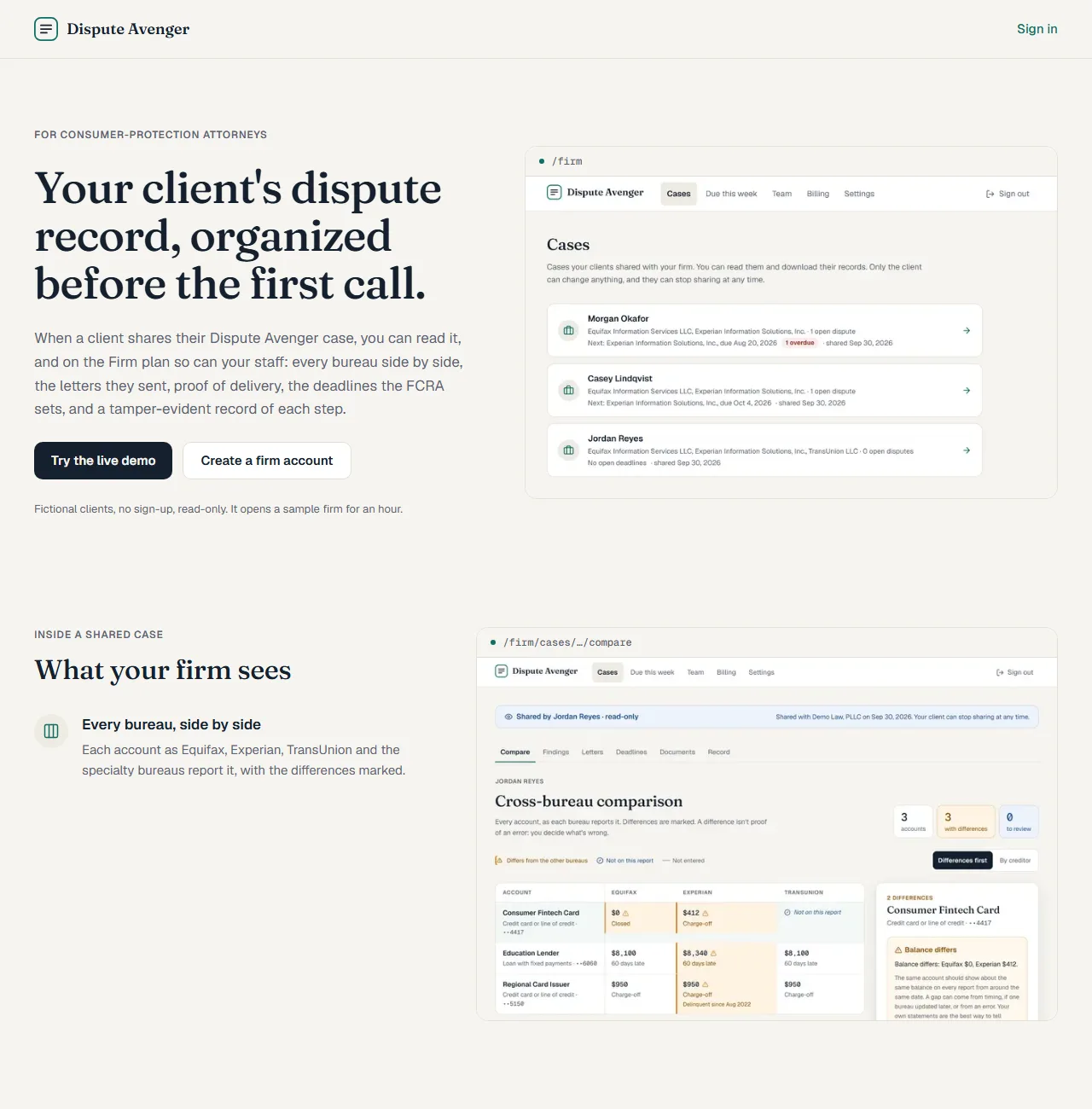
One case, from the first report to an attorney’s desk.
Every bureau, side by side
Accounts from Equifax, Experian, TransUnion and the specialty bureaus line up in one grid, and every difference in balance, status or dates is marked and explained in plain words.
Findings in your own words
Rules flag what looks inconsistent. Nothing becomes a dispute until the person confirms it, writes the reason themselves and attaches evidence — or says why they have none.
Letters that pass a check first
Each letter is generated as a PDF only after a compliance check passes. A letter can’t cite the seven-year reporting limit, for example, until the dates actually support it.
Deadline clocks
Sending a dispute starts its legal clock. A daily job tracks every one, moves expired disputes to the next step and keeps follow-ups on the original clock instead of resetting it.
Next steps when a bureau stalls
An escalation ladder suggests the next move. A CFPB complaint draft is assembled from the case record, and certified mail through Lob is built in, ready to switch on.
A workspace for attorneys
A person can share their case with a consumer-protection firm. The firm reads everything — reports, letters, proof of delivery, deadlines — and changes nothing, and every view is logged in the person’s record.
The decisions that matter, and why.
- 01
Each account’s data is walled off by the database itself
Postgres row-level security and tenant-scoped foreign keys keep every account’s records apart, so a bug in one API route can’t leak another account’s file. A cross-account test harness runs against every route in the API.
- 02
A record that shows if it has been edited
Every step — a letter generated, a file opened, a deadline passed — is written to an append-only log where each entry carries a hash of the one before it. Changing an old entry breaks the chain, and the attorney packet is fingerprinted the same way.
- 03
Evidence is encrypted before it is stored
Uploads are encrypted with AES-256-GCM before they reach storage, so the storage bucket only ever holds ciphertext. Nightly backups are encrypted too, and CI restores one and checks it on every run.
- 04
The compliance check has exactly one door
Only the letter service may call the compliance gate, and every letter goes through that service. That leaves one place to audit and one place to change when a rule changes.
- 05
AI with guardrails, not free text
The assistant drafts from the case record through forced tool calls that return structured JSON. A refusal list and output checks sit on both sides, so it can’t give legal advice or invent facts the record doesn’t hold.
- 06
Ship the product, hold the switch
Stripe billing for people and for firms is built and tested, but turned off behind a setting. Selling credit-dispute software has real legal rules, so charging waits until counsel signs off — the decision log records that choice along with 76 others.
Dispute Avenger is live as a beta at app.disputeavenger.com. Before it opens to the public: a legal review of how it is marketed, email-provider approval, and then switching billing on. Next on the build list is a read-only demo firm so attorneys can try it without signing up.
Talk about a build like this